Protecting young women and girls in Tanzania
More than 25 million Tanzanians live in extreme poverty, leaving many young women and girls vulnerable to hunger, family breakdown, and abuse. With limited options, thousands of children are pushed into dangerous environments — including the streets — where exploitation is a constant threat, especially for girls.
Author: Lucy Carman | Date: 2nd March 2026
Saving girls from hidden exploitation
Some girls are sent away by well‑meaning families to work as domestic helpers, only to discover that the promised income, opportunities, and safe living conditions quickly turn into abuse, exploitation, and unpaid labour.
Others are forced into early marriage, with parents believing this is the best way to secure their daughters’ futures.
From our work, we know that many girls never even make it onto the streets. When they arrive at busy bus terminals, they are often approached — and sometimes taken — by individuals seeking to exploit them before support workers can intervene. To stop this, we must reach girls immediately, at the point of arrival.
Thanks to your support, that is exactly what we are doing.
Making public spaces safer
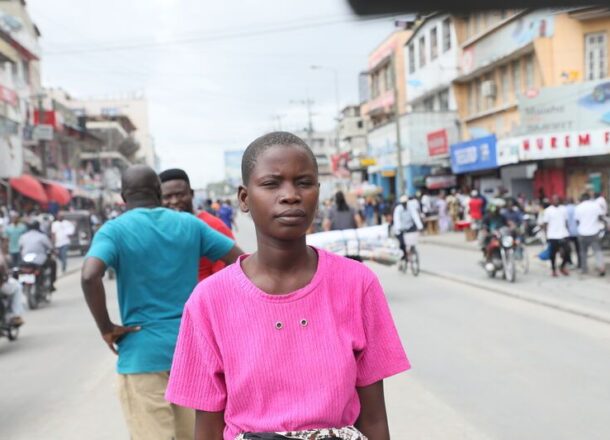
To protect girls in high‑risk public areas, especially around transport hubs, we established Safe Bus Terminal Committees. These committees bring together government representatives, community leaders, local retailers, police, and outreach workers to identify risks and respond quickly to children in danger.
Our outreach teams focus on ensuring that the people most likely to encounter vulnerable girls — such as drivers, conductors, and vendors — know how to recognise warning signs and where to seek help.
In 2022, we opened three Social Welfare Service Desks in the busy bus terminals of Dar es Salaam and Mwanza.
The success of this initiative led to the launch of 14 Social Welfare Desks across 12 regions of Tanzania in 2025, created in partnership with the Tanzanian Government to replicate our proven model. Last year, these desks reached 1,891 children, including 863 girls (45%), providing vital protection at the very moment they needed it most.
These desks now act as the first point of contact for vulnerable children travelling alone — often the exact moment when girls are targeted by traffickers or exploitative “employers.”
In 2025, we reached 1,891 children, including 863 (45%) girls – through Social Welfare Service Desks in Tanzania.
There for girls today — and tomorrow
Many children reach these Social Welfare Desks thanks to concerned members of the public or transport staff who recognise a girl in distress.
This was the case for Anna, whose story you can read here.
Once a child reaches us, we work alongside government Social Welfare Officers to ensure immediate safety, care, and counselling.
From there, we support girls and boys long‑term, helping them rebuild confidence, re-enter education, reconnect with family when safe, and plan for brighter futures.
Your support makes this possible
£40 could run a Social Welfare Desk at a bus terminal for an entire week, giving children travelling alone somewhere safe to turn for advice, protection, and hope.
Together, we are creating safer public spaces, stopping exploitation before it begins, and ensuring that every girl has the chance to grow up free from danger.
*Name changed