Neurodivergence
Find advice and support around neurodivergence.
Understanding Neurodivergence
There are lots of natural differences in how people think, learn and act.
If you have a neurodivergent condition, like autism, ADHD or dyslexia, you might feel different from people with more “typical” brains.
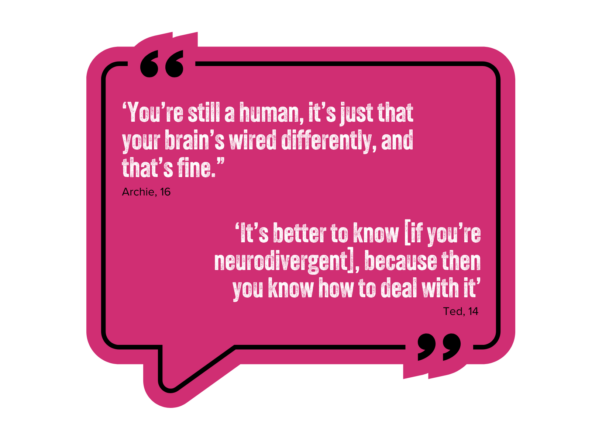
But that’s okay. Your brain is wired differently, which means you have strengths that others don’t.
In school, they can give you a lot of support once they know.
Learning differently doesn’t mean you can’t do well at school. You might be given extra time in exams or be allowed to use a laptop or sit in a certain seat in the classroom.
If you know you have a difference in how you learn, process information, manage emotions or interact socially, it’s completely your decision about who you want to tell and when. However, in a learning environment or workplace, it can help to talk to key people about a neurodivergence. Once people know, they can put measures in place to support you, and it can help close friends and family understand you better.