
Social media and online safety
How to stay safe and protect your mental health while online.
Navigating social media
Social media is a big part of today’s world. It’s a great way to connect with friends, share your interests and discover new things.
But it’s important to know how to keep yourself safe and protect your mental health while you’re scrolling. Here are some tips:
1. Protect your privacy: keep profiles private. Think twice before sharing personal information, like your location, school or full name.
2. Stay safe from strangers: be careful about accepting friend requests or DMs from people you don’t know. Always report or block anyone who makes you feel uncomfortable.
3. Think before you post: remember, once it’s online, it’s hard to take it back.
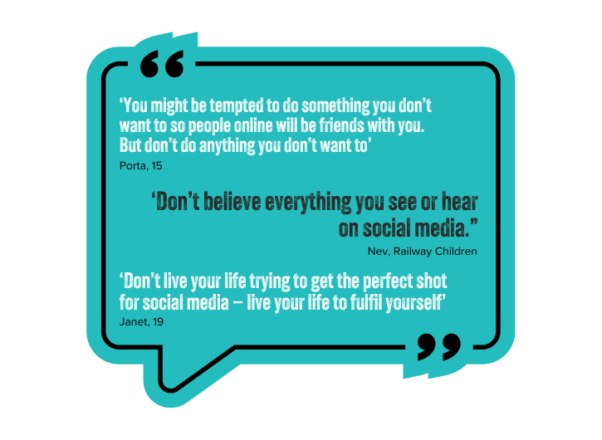
4. Remember that posts on social media rarely reflect reality: don’t compare yourself to others or judge your own life by people’s perfectly manicured moments – what people choose to show the world rarely reflects what’s really going on in someone’s life.
5. Dealing with negativity: if you experience bullying online or see harmful content, report it to the platform and talk to an adult you trust. Remember, it’s ok to step away.
Staying safe online
We live in an exciting time when pretty much anything or anyone can be discovered, signed up to or communicated with online – but that can also bring dangers.
Wise up to the most common pitfalls and stay safe and happy while you’re browsing the online world.
1. Beware of scams: over 40% of young people have subscribed to something without realising, been scammed or lost money online. If you spend money you didn’t intend to, contact your bank straight away. They may be able to help you get your money back. Unsubscribe to anything you didn’t mean to subscribe to and, if your bank details could have been accessed, cancel your cards.
2. Look after your wellbeing: when you’re scrolling, the world can feel like a dark place. Take breaks if you start to feel overwhelmed and do something to remind you of what’s good in the world. And unfollow or mute accounts that don’t make you feel good about yourself.
3. Don’t neglect the real world: use apps or phone settings to set limits on your screen time. Spending too much time online can affect your sleep, mood and physical health. So get the balance right.
4. Remember that AI is just a tool: don’t let it take the place of real, human interaction, don’t trust everything it says or shows (it can be wrong), and don’t let it take the place of creative thinking, problem solving, relationships – or reality.
5. Take advantage of the online world to stay safe offline: apps like Trainline, UK Bus Checker and Google maps are really handy for smooth, safe travel, while apps like Headspace and Kooth can help protect your mental health. Remember, you can also text British Transport Police on 61016 if you’re worried about anything on trains or at stations.