Skip to Content
Home > Blog > Young voices > Becoming Julia

From realisation to transition: Julia’s experience growing up transgender

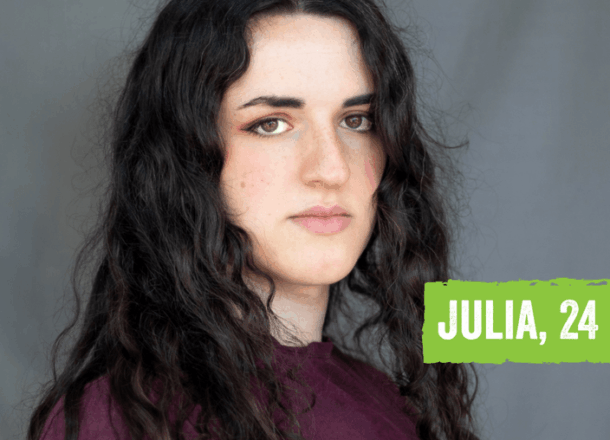
Julia, 24, grew up as a boy but knew, early on, that the gender she’d been born into was not who she was. Here, she talks to Youth Platform about her journey, and what she wishes she’d know as a ten-year-old boy. 

Author: Lucy Carman | Date: 31st March 2026


Thanks so much for sharing your story, Julia. I guess the first question is how you came to realise that you weren’t in the right body. Was it gradual or a sudden realisation – or a bit of both?

Growing up, I was never particularly boyish – I didn’t like football or shooting games or anything like that. And I always preferred girls’ cartoons. But I didn’t think much of it – just that I was maybe a bit weird! But eventually I noticed a trend. I would watch cartoons where, for some reason, the main character’s gender would switch, and I’d always feel jealous and wasn’t sure why. Eventually, one night when I was about 10 or 11, I found an old documentary about a girl called Jazz Jennings who was pretty much the first famous trans kid. And I remember watching that and thinking, ‘Oh! That might be me’. 

I sent a text to my dad. And I remember it so clearly. I was watching YouTube, and I quickly drafted this text to my dad, then went back to the video, then back to the text, pressed send, and then quickly went back to the video to distract myself. I was terrified.  


Terrifying, but did it also feel like a relief to have told someone?

It did. And my dad was pretty good about it all. He was very much like, ‘Are you sure?’ Not looking down on me or anything, but obviously, it was a big thing for him to process.  

And, actually, due to how the world was at the time, being ‘out’ led to some pretty rough bullying. So I ended up going back into the closet, because we moved to a different part of the country and I had the chance for this fresh start, and I just couldn’t face the whole kick in the teeth of being out. I mean, no-one knew what a trans person was back then. So it was a lot of people being like, ‘You want to be a girl? Ugh, why would you do that?’  


That must have been really hard when you’d already identified as female – you’d told your dad, you’d taken that massive, scary step, and then you just had to take a step back again. Where was your head at during that time?

It’s hard to say because I think I dissociated for a lot of it, so I don’t remember a good chunk. But I do remember, when we moved to this new place, crying in the car with mum because I wanted to move there as a girl, but, seeing how harsh people could be about transgenderism, I was too scared. 

It was easier to be that boy I knew I wasn’t. But now I really regret it. I wish I’d stuck with it the first time.  

So how did you move from that to where you are today?

I was crying myself to sleep regularly for years and just realised something had to change. 

Being trans had become more present in the media by then, and I remember one night seeing a post that said, ‘If there was a button you could press to instantly turn into a girl, would you press it?’ And, without hesitating, I thought, ‘yes, I absolutely would’.  

I remember thinking, ‘I am trans. I need to go through with this,’ and that same week, my mum had something come up on her Facebook feed about a trans woman and said, ‘Do you remember when you were like that?’ And I was like, ‘What if I was still like that?’ So then the conversation started up again, and we got the ball rolling. 

It was actually scarier the second time around because I knew I had to go through with it.  

Were there ever any feelings of ‘I don’t know if I can do this,’ or ‘I’m not sure I want to,’ or were you absolutely certain it was the only way you could feel happy?

There are a lot of hardships with being trans.

There have been plenty of times where it’s been so hard and transitioning, especially at first, will bring out more of your gender dysphoria [feelings of intense distress from a mismatch between assigned gender at birth and gender identity] because you’ve been suppressing it for so long.

So when you finally start seeing changes, the things that aren’t changing are horrifying. But if I hadn’t transitioned, I don’t think I would be living a life – or possibly even be alive – at all. So, really, there was no choice. I would be absolutely miserable if I were still pretending to be a man.  


And how was the actual process of transitioning – physically, emotionally and psychologically?

It’s been difficult at times because, obviously, I finally transitioned, and yet I’m still so far from where I want to be. But at the same time, I no longer have a full beard. I’ve trained my voice to sound like this. No one ever calls me, sir, or calls me a man in public. I may not be totally where I want to be, but I’ve accepted and started to love what I have, rather than hoping for more because I’m kind of like, ‘Well, you know, I pass! I look good and I sound good and I’m a million times happier than I was before’.   


You mention body dysphoria related to your gender; have you also experienced some body euphoria as you’ve started to see some changes?

I have, yeah. I was around at my friend’s house yesterday and parts of me have rounded out a bit because I’ve upped my hormone dosage slightly and I literally stared in the mirror for 20 minutes and cried because it made me so happy. So, yeah, I’ve had plenty of moments of euphoria, and it’s just incredible when it hits. Those moments make all of the really difficult times worth it.

The first time I got called ‘m’aam’ in public was incredible!  


So as a woman now looking back, what would you say to that scared 10 or 11-year-old who had just started to realise they were trans?

So many people assume that because you’re young, you don’t understand yourself. People think it’s just a phase and that you don’t really know yourself because you haven’t been through puberty. Personally, I wish I had gone on hormones when I was younger – it would have saved me so much pain. There’s so much I’ve had to undo and fix – and still am fixing – because I went through male puberty.

I knew that I knew. So I think my message would be to trust myself.  

I’d also tell myself to start voice training early! For trans men, their voice on testosterone will drop, so they don’t have to worry about it. But for trans women, we have to train our voices to sound more female.  
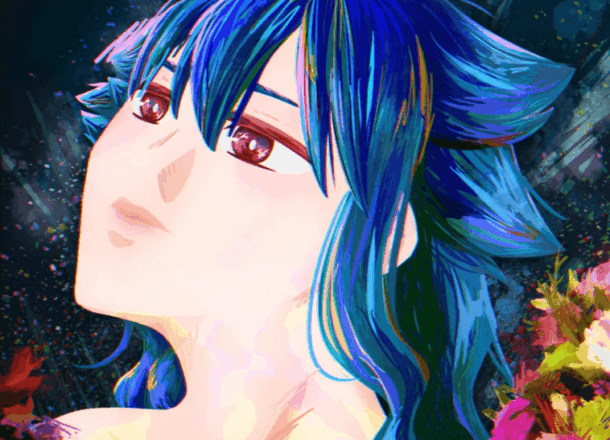
And finally, you create some fantastic music and graphic animations on your YouTube channel, Tsukuya. Was this something borne out of your trans experience?

Being trans is heavily intertwined with my music.

I have a song I’m working on at the moment that’s about transition and becoming who you’re supposed to be. But my music also tracks my vocal journey into sounding more feminine. It’s been really cathartic, especially earlier on when everything I wanted and needed to happen was still a long way off. Music became a coping mechanism. My YouTube channel started as a cover channel, just a way to have fun. But then I realised I really enjoyed it and that I could put more emotion into it.  

A lot of my songs are quite depressing! But it was my way of taking my pain and making it into something productive. So I’m glad I made them.  

Thank you so much for speaking to us, Julia, and for sharing your story. You have been and still are amazing. Thank you for being who you are and speaking out.


If you’re a young person looking for support, advice or someone to talk to, The Mix offers free confidential help for under-25s. 

For support around identity, mental health or finding safe spaces, you can also get in touch with Stonewall Young People or Young Minds

Our latest updates

Over £60,000 raised from Night at the Station

Over 200 supporters from the rail industry raised more than £60,000 at Railway Children’s Night At The Station event, spending a night in stations across the UK to protect vulnerable children at risk.

Date: 30/3/2026

Young voices leading the way

Through our flagship youth participation programme, Youth Platform, young people are shaping our training materials, influencing key decisions and ensuring the rail industry truly understand youth vulnerability.

Date: 03/3/2026

Protecting young women and girls in Tanzania

More than 25 million Tanzanians are living in extreme poverty, leaving many young women and girls vulnerable to hunger, family breakdown, and abuse.

Date: 02/3/2026

Becoming Julia

Julia, 24, grew up as a boy but knew, early on, that the gender she’d been born into was not who she was. Here, she talks to Youth Platform about her journey, and what she wishes she’d know as a ten-year-old boy. 

Date: 31/3/2026

Why we’re celebrating Neurodiversity Week

Reflecting on the unique strengths different minds bring to Railway Children and the rich potential of the neurodivergent young people we support.

Date: 17/3/2026

The children helping each other

In India, Railway Children is reaching some of the most vulnerable young people through a powerful and proven approach: peer leadership.

Date: 03/3/2026
Close

Image collage showing young people in the UK, India and Tanzania

Join us

Sign up to receive email updates about our work protecting children around the world, and how you can help to change lives.

You can unsubscribe at anytime.

Sign up

Translate »