Hundreds of Rail Industry Supporters Scale British Peaks
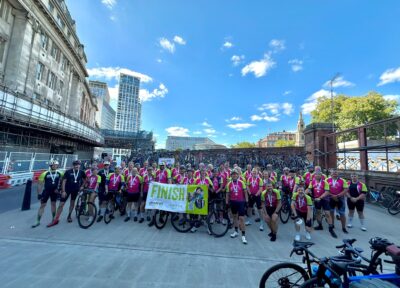
More than 270 participants took on two iconic mountain challenges this summer, raising an incredible £252,546 to help vulnerable children in the UK, India and Tanzania.
How we protect and safeguard vulnerable children from exploitation on transport networks.
Updated: 28th April 2026 | Author: Amy Wright
At Railway Children, we aim to create a safer world for vulnerable children and empower them to sustain positive change in their lives.
Central to our work in India, Tanzania and the UK is identifying children who are experiencing or at risk of harm and taking action to keep them safe and supported long-term.
Safeguarding and child protection are terms often used interchangeably, but there are key differences between them.
Safeguarding refers to the steps taken to ensure that children and young people are protected from abuse, neglect and exploitation, and that their wellbeing is actively promoted.
In relation to our work, this can include making train stations safer for young people and creating environments where children are protected while travelling.
Safeguarding responsibilities include:
Child protection is closely linked to safeguarding but focuses specifically on children who are known or suspected to be experiencing harm or at risk of harm.
Child protection can include:
Safeguarding and child protection are closely connected and both play a vital role in protecting children’s wellbeing.
Importantly, both share the same goal: to ensure children are safe and supported.
Both approaches consider the wider context of a child’s life, including:
For example, if a child is at risk of exploitation, professionals will take a holistic view of their situation to understand the full range of risks and needs.
Teachers, social workers, health professionals and youth practitioners all have a duty of care. They often work together to share information, identify risks and ensure appropriate safeguarding measures are in place.
Many children use transport networks to escape difficult or unsafe situations, including abuse, neglect or family breakdown. Some may also be at risk of criminal or sexual exploitation, or struggling with poor mental health.
In the UK, our Safeguarding on Transport programme focuses on improving the safety and wellbeing of vulnerable children and young people using the transport network.
In Tanzania and India, our child help desks in train stations and bus terminals provide safe spaces where vulnerable children can receive immediate support. Our teams assess their situation and help connect them with longer-term care and protection.
A key part of this work is focusing on the places young people interact with outside the home — particularly rail and bus networks, where we know safeguarding concerns frequently arise.
More than 270 participants took on two iconic mountain challenges this summer, raising an incredible £252,546 to help vulnerable children in the UK, India and Tanzania.
More than 1,000 children learn vital skills at Leeds Station Safety Week. The flagship safety initiative – now in its 10th year – got under way at the station on Monday 15 June and runs to Friday 19 June during Rail Safety Week (15-21 June).
In a recent report, more than 40% of people said they wouldn’t know what to do if they spotted a child at risk at a train station. * That’s a statistic that Railway Children’s new interactive game, Seconds to Safety, is here to change.
Learn about safeguarding and how it relates to child protection on transport networks.
No child wants to survive on the streets. And, through understanding and empowerment, together, we can ensure no child has to.
Julia, 24, grew up as a boy but knew, early on, that the gender she’d been born into was not who she was. Here, she talks to Youth Platform about her journey, and what she wishes she’d know as a ten-year-old boy.