Inside Waterloo Station
In her first nine months, Nicki Mackin has helped safeguard dozens of young people and worked with rail staff, retailers and the public to improve awareness of vulnerability across the station.
The new Global Charter on Children’s Care Reform is a powerful step toward a world where every child can grow up in a safe, loving home.
The UK Foreign and Commonwealth office has launched a new international charter setting out new standards for care systems. Here’s what this means for street-connected children.
Author: Con Enzler | Date: 13th October 2025
We believe that every child deserves a safe, loving family. This isn’t just our mission—it’s the fundamental right of every child.
The UK’s Foreign, Commonwealth & Development Office (FCDO) has launched a powerful new Global Charter on Children’s Care Reform, setting out a new standard for care systems.
We’ve joined hundreds of organisations and a growing number of national governments, in signing this charter to reaffirm our commitment to advocating for children to be placed in safe, nurturing family care.
This is a landmark moment that aligns with our mission to ensure every child grows up in a safe family-based environment.
The charter’s core principles are clear:
These principles are not new to us – they’re at the heart of our work.
Institutions can cause significant harm to a child’s development. We know the best place for a child is always within a family, whether it’s their own or an alternative family that can provide the love and care they need.
Supporting family reintegration over institutional care has always been a key principle of our work.
When a child has no option but to survive on the streets, we know that very often things have gone badly wrong at home. There are many reasons that drive family separation, including family breakdown, violence and abuse, and poverty.
Children in these situations end up living on the streets, being trapped in exploitative situations, or they end up in institutions.
That’s not good enough for us. So we work hard to reunite children with their families and support them to address whatever issues caused the separation in the first place.
But our first priority is for children to be safe and loved, so if issues at home are too challenging, we’ll find a relative or friend who can step in. We are proud that about a third of the families we support in Tanzania and many of those we support in India, are kinship carers.
Though this therapeutic and practical approach, we help ensure children feel safe, nurtured and supported as part of a family home.
We know that our family-first approach creates the best outcomes for children on the streets, and for all children having to survive outside of family care, including the millions of children in institutions across the world.
That’s why we are delighted to endorse the Global Charter.
For over a decade, Railway Children Africa has been a leader in Tanzania’s care reform journey.
We have worked alongside the Tanzanian government in the National Alternative Care Technical Working Group to help develop a national roadmap for care reform.
This work ensures that we are not just helping one child at a time but are fundamentally changing the system for generations to come. The FCDO charter now gives this work a powerful new voice and a global platform.
In her first nine months, Nicki Mackin has helped safeguard dozens of young people and worked with rail staff, retailers and the public to improve awareness of vulnerability across the station.
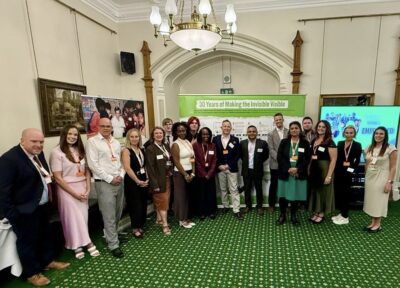
As the only UK voices on the Children and Young People’s Global Taskforce for Care Reform, Railway Children Youth Ambassadors Corey and Elliot brought their lived experience to parliament!
Bringing Escape Rooms, youth voices and safeguarding action to the first ever UK Rail conference.
Learn about safeguarding and how it relates to child protection on transport networks.
No child wants to survive on the streets. And, through understanding and empowerment, together, we can ensure no child has to.
Julia, 24, grew up as a boy but knew, early on, that the gender she’d been born into was not who she was. Here, she talks to Youth Platform about her journey, and what she wishes she’d know as a ten-year-old boy.